Table of Contents
TogglePicking the right character in Overwatch can feel like assembling a team without knowing what role you’re actually filling. Whether you’re queuing solo or climbing competitive ranks, the heroes you choose define your game, and your team’s chances of taking the point. In 2026, Overwatch’s roster has evolved significantly, with balance patches reshaping which characters dominate each role. This guide breaks down the best Overwatch characters across tanks, damage heroes, and supports, focusing on what actually matters: their current meta viability, skill floor, and how they fit into winning strategies. You’ll find recommendations tailored to your playstyle, experience level, and the way you like to approach teamfights.
Key Takeaways
- The best Overwatch characters depend on your playstyle, skill level, and the current meta, with Reinhardt and Winston dominating the tank role while Tracer and Sojourn lead damage output.
- New players should start with beginner-friendly heroes like Mercy, Reinhardt, or Sojourn to build foundational skills before advancing to mechanically demanding characters like Genji and Widowmaker.
- Building a sustainable hero pool of 2–3 characters per role balances specialization with flexibility, allowing you to adapt to team needs without spreading your practice too thin.
- The 2026 meta emphasizes hitscan dominance, precision-based damage, and healing economy, making heroes like Sojourn and Zenyatta increasingly viable across ranked play.
- Success in Overwatch requires understanding why characters excel in current conditions rather than blindly following meta trends, combined with mastery of character-specific mechanics and positioning.
Understanding Overwatch Character Roles and Meta
Before diving into specific hero recommendations, it’s crucial to understand how Overwatch‘s role system works and what drives the current meta. The game is built around three core roles: Tank, Damage, and Support. Each role has distinct responsibilities, and the meta, the most effective tactics available, shifts based on map design, seasonal balance changes, and professional play trends.
The 2026 meta heavily emphasizes tanking mechanics and ultimate economy. Unlike seasons past, current balance favors dive-heavy compositions and poke-based damage output. This means heroes who can execute quick exchanges and maintain map control thrive, while traditionally defensive heroes require more coordinated play to succeed.
Meta viability isn’t just about raw statistics: it’s about the synergies between your six-player team. A hero’s strength depends on team composition, your skill level on that character, and opponent selections. That said, some characters offer better versatility and lower mechanical skill requirements, making them safer picks in most situations.
Top Tank Characters for Dominance
Tanks set the tempo for teamfights. They dictate where your team positions, absorb critical resources, and create opportunities for your damage dealers. In 2026, the tank meta rewards active play and calculated aggression.
Reinhardt: The Classic Anchor Tank
Reinhardt remains the foundation of organized team play. His Barrier Field (2000 HP shield) provides unmatched protection, and his Hammer delivers devastating close-range damage at 75 per swing. For teams running grouped compositions on payload maps like Route 66 or King’s Row, Reinhardt is practically mandatory.
What makes Reinhardt effective isn’t flashy mechanics, it’s consistency. He creates a literal wall that opponents must respect, and his Charge ability can punish positioning mistakes or create space-saving plays. His Earthshatter ultimate applies Stun status to all enemies hit in a cone, which combined with coordinated follow-up damage, can end fights instantly.
The downside? He’s slow and demands smart positioning. Reinhardt players must anticipate enemy abilities and shield management matters tremendously, overextending drains your barrier health quickly. His lack of mobility also makes him vulnerable to high-burst damage or coordinated focus fire.
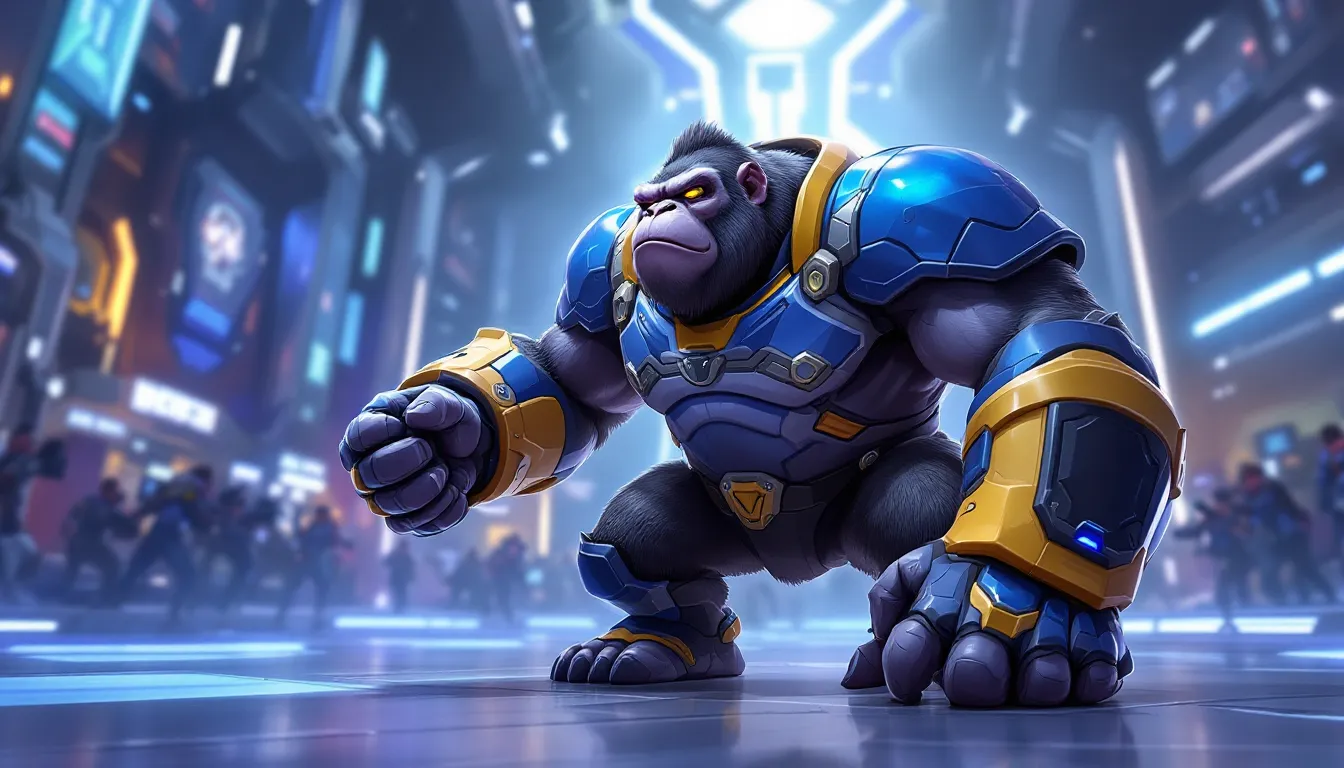
Winston: Dive Tank Excellence
Winston is the mobility-focused tank that punishes separated enemies. His Tesla Cannon applies splash damage, making him excellent at spraying multiple opponents simultaneously. With Jump Pack, he covers distances instantly, enabling aggressive flanks or quick repositioning.
Winston thrives in fast-paced compositions where your damage dealers also emphasize mobility, think Tracer, Genji, or Echo. His Primal Rage ultimate transforms him into a damage-absorbing beast with knockback capability, perfect for creating chaos during teamfights and separating enemy supports from their tanks.
The challenge: Winston requires team coordination and careful target selection. He can’t 1v1 most heroes, and if his dive lacks follow-up damage, he dies quickly. Playing Winston demands game sense and map awareness to identify vulnerable targets worth diving toward.
Junker Queen: Aggressive Brawler Tank
Junker Queen brought a fresh tank archetype to Overwatch, one that thrives in chaotic brawls. Her Scattergun fires pellets in a cone (40 damage per bullet), and her Axe enables quick melee follow-ups. More importantly, her Commanding Shout ability heals herself and nearby allies while applying Fortify (damage reduction), and her Carnage ability creates a Bleed effect on enemies hit, enabling coordinated burst damage.
What separates Junker Queen is her self-sufficiency. Unlike Reinhardt, she doesn’t anchor teammates, she creates tempo through aggression and healing herself. Her ultimate, Rampage, is a linear charge that leaves Bleed on everyone hit, enabling team cleanup kills.
The downside is that Junker Queen lacks shields, making her reliant on good positioning and team support. She’s best on brawly maps like Lijiang Tower where close-quarters fights are inevitable, but she struggles on wide-open spaces where enemies maintain distance.
Best Damage Heroes for Elimination
Damage heroes are your primary elimination tool. They secure eliminations, apply pressure, and enable your tanks’ aggression. The damage role in 2026 is diverse, with distinct playstyles ranging from precision-focused to utility-heavy.
Tracer: Speed and Precision Combined
Tracer is the quintessential dive damage hero. Her Pulse Pistols deal low individual damage but excel with sustained spray, and her Blink ability lets her reposition instantly three times before cooldown. Her Recall ability is her defensive safety valve, it resets her position and health pool, making her nearly impossible to pin down.
Tracer dominates in hands-on gameplay. She wins 1v1 duels through positioning and stutter-stepping, and her Pulse Bomb (ultimate) applies 300 damage in a small radius, often securing cleanup kills or forcing defensive abilities. What makes Tracer special isn’t raw damage output, it’s her ability to apply constant pressure without relying on teammates for protection.
The skill floor is steep. Tracer’s survivability depends entirely on player mechanics: landing shots, predicting enemy movement, and knowing when to engage versus retreat. She’s bad into certain enemy compositions, particularly hitscan heroes like Soldier: 76 or Cassidy who outgun her at range. Knowing matchups and dodging skillshots is non-negotiable.
Widowmaker: Long-Range Dominance
Widowmaker is pure precision hitscan. Her Harpoon Gun fires projectiles with 120 damage per headshot, and her Grappling Hook provides unparalleled map mobility. From high ground, she creates enormous zones of control, enemies literally cannot cross without getting picked.
Widowmaker’s strength is her optimal range. She doesn’t need team coordination to enable kills: clean positioning and accurate clicking secure eliminations independently. Her Infra-Sight ultimate reveals all enemies through walls for six seconds, providing crucial intel for team engagements.
The catch? Widowmaker has no escape beyond grapple. If caught off-position or in close quarters, she dies. She also requires consistent mechanical skill, missed shots waste ultimate economy. Teams can also pressure her position through flanks or map knowledge, forcing repositioning that wastes time.
Genji: Agility and High-Skill Plays
Genji is Overwatch’s mechanical showcase. His Shuriken projectiles (29 damage per hit) reward prediction and tracking, his Dash resets on elimination and enables instant repositioning, and his Deflect ability negates incoming damage and redirects projectiles, a high-skill defensive tool.
What separates Genji is his playmaking potential. His Dragonblade ultimate swings a blade that deals up to 120 damage per swing in a melee range, and the cooldown resets on eliminations. Coordinated Dragonblade activation can wipe entire teams if enemies are positioned poorly.
Genji’s downside is his mechanical requirement. He lacks reliable durable damage output, you need clean projectile hits or swift elimination access. His health pool (200 HP) makes him vulnerable to burst damage, and positioning mistakes are immediately punished. New players attempting Genji often feed ultimate economy without applying meaningful pressure.
Sojourn: Modern Hitscan Power
Sojourn is 2026’s refined hitscan character. Her Railgun fires pellets with an alt-fire charged shot dealing up to 120 damage, rewarding positioning and preaiming. Her Power Slide provides mobility, and her Disruptor Shot slows and applies knockback, enabling kiting or disruptive positioning plays.
Sojourn has emerged as a meta staple because she offers consistent damage without requiring extreme positioning. Her charged shot provides burst damage while her pellet spray handles close range. She also doesn’t depend on mobility as heavily as Tracer, her Power Slide is more about positioning than evasion.
The downside is that Sojourn’s value comes from consistency, not playmaking. She won’t solo-carry through mechanical outplays like Genji or Widowmaker. But, her reliability and damage output against standard team compositions make her a safer competitive pick.
Essential Support Characters for Team Success
Supports enable everything. They keep teammates alive, enable aggressive play, and often determine teamfight outcomes through positioning and awareness. The support role requires understanding how your abilities scale with team play.
Mercy: Reliable Healing and Mobility
Mercy is the most accessible support hero. Her Healing Beam provides consistent 55 HP/second healing, and her Damage Boost amplifies ally damage by 25%, simultaneously increasing eliminations and primary team damage output. Her Guardian Angel ability lets her fly instantly to teammates, providing unmatched mobility.
Mercy’s strength is simplicity paired with impact. She doesn’t require mechanical skill or complex ability combinations, position yourself near teammates and heal/boost as needed. Her Resurrection ultimate (brought back a full-health eliminated ally) changes teamfight math entirely, making her critical in extended fights.
The challenge is that Mercy is vulnerable. She’s a stationary target while healing, and her survival depends entirely on teammate positioning. Poor positioning from your team forces you into dangerous areas. She also lacks defensive abilities, making her reliant on teammates for protection against enemy dives.
Lucio: Speed Boost and Area Control
Lucio is the tempo-control support. His Crossfade ability switches between healing (40 HP/second in radius) and Speed Boost (30% movement speed), and his Sound Barrier ability (his ultimate) grants shields to nearby allies, 100 shield per ally, up to 750 total. His mobility through Wall Ride (moving along walls) enables creative positioning.
Lucio’s strength is map control and pacing. Speed Boost enables aggressive rotations and creates tempo through sustained pressure. Sound Barrier is a powerful defensive ultimate that stacks with barrier abilities, letting coordinated teams absorb massive burst damage. He’s also difficult to eliminate thanks to Wall Ride and his small hitbox.
The downside is that Lucio’s individual healing is the lowest in the support role, making him rely on teammates not taking damage. His Wall Ride mastery has a high skill ceiling, and positioning mistakes result in feeding enemy ultimate charge. He’s also weak to certain matchups where he can’t control positioning.
Zenyatta: Damage Amplification Support
Zenyatta is the damage-focused support. His Orb of Harmony provides 15 HP/second healing on a single target, while his Orb of Discord amplifies damage taken by affected enemies by 25%, a multiplicative advantage for your entire team. His projectiles deal 45 damage per hit, enabling secondary damage output.
Zenyatta’s unique value is amplification. Discord Orb fundamentally changes ability cooldowns: abilities that normally deal 150 damage now deal ~187.5 damage (accounting for damage type). This enables faster eliminations and resource depletion. His Transcendence ultimate (invulnerability + healing radius) is the ultimate teamfight defense, completely negating burst ultimates.
The catch is that Zenyatta is vulnerable. He has the lowest health pool in the support role (200 HP) and zero escape abilities, his survival depends entirely on team positioning. He also can’t enable aggressive play the way Mercy’s Damage Boost or Lucio’s Speed Boost can. Playing Zenyatta demands perfect positioning and positioning misjudgment means immediate elimination.
Character Selection Tips Based on Playstyle
Understanding your natural playstyle accelerates character mastery. Different playstyles reward different heroes, and matching your character pool to your approach maximizes impact.
Aggressive Players: Champions for Offense-First Mindsets
Aggressive players thrive on creating space and securing eliminations. They push forward, initiate engagements, and enable team offense. The best characters for aggressive playstyles include:
- Junker Queen (Tank): Her self-healing and Bleed application enable constant pressure without relying on supports.
- Tracer (Damage): Her Pulse Bomb rewards forward positioning and enables cleanup eliminations.
- Sojourn (Damage): Her charged shot punishes opponents who stand still during poke trades.
- Lucio (Support): Speed Boost enables aggressive rotations and team tempo, making him perfect for aggressive teams.
Aggressive players often struggle with patience and resource management. Overextending without support, burning cooldowns without backup, and chasing eliminations into unsafe areas are common mistakes. Success requires channeling aggression into objective focus rather than pure fragging.
Defensive Players: Heroes for Strategic Protection
Defensive players excel at controlling space, reading enemy positioning, and enabling teammates. They prioritize survival and resource efficiency. The best characters for defensive playstyles include:
- Reinhardt (Tank): His Barrier Field is the definition of defensive space control.
- Widowmaker (Damage): High-ground positioning creates zones opponents can’t enter safely.
- Mercy (Support): Her role is enabling teammate survival and maintaining resource efficiency.
- Zenyatta (Support): Discord Orb enables offensive punishing while staying defensive through positioning.
Defensive players can struggle with initiative and aggression. Playing too cautiously loses map control and objective pressure. Success requires recognizing when defensive postures transition into offensive advantages.
Balanced Players: Versatile Characters for Adaptability
Balanced players adapt to team composition and match circumstances. They aren’t locked into one playstyle but flex based on team needs. The best characters for balanced playstyles include:
- Winston (Tank): His dive mechanics adapt to offensive compositions or enable defensive regrouping.
- Genji (Damage): His playmaking enables both aggressive and reactive gameplay.
- Sojourn (Damage): Her consistency works across playstyles without demanding specialization.
- Lucio (Support): His flexibility switches between offense and defense instantly through Crossfade.
Balanced players sometimes lack specialization, struggling to hardpop when specific situations demand pure focus. Success requires developing deep mastery in a few versatile heroes rather than spreading skills too thin across many.
Beginner-Friendly vs. Advanced Characters
Your skill level determines which characters enable success and which frustrate through mechanical demands. Strategic selection accelerates improvement.
Easy-to-Learn Heroes for New Players
New players benefit from heroes with straightforward mechanics and forgiving skill floors. These characters enable meaningful impact while reducing cognitive load:
- Reinhardt: No mechanical complexity, shield management and positioning are learnable through repetition. His impact is immediate and obvious.
- Mercy: Straightforward healing and boost mechanics. Success comes from positioning near teammates, not mechanical execution.
- Sojourn: Point-and-click damage with consistent output. Her charged shot rewards tracking without requiring perfect prediction.
- Junker Queen: Simple ability combinations. Her self-healing removes reliance on perfect support coordination.
New players should avoid Tracer, Genji, and Widowmaker initially. These require mechanical precision and game sense that develops over time. Diving in without foundation is actively counterproductive.
Mastery-Required Characters for Competitive Play
Competitive play demands heroes where mechanical mastery creates enormous skill gaps. These characters separate good players from great ones:
- Tracer: Her TTK (time-to-kill) is unforgiving. Clean positioning and shot accuracy determine outcomes, and mistakes are instantly punished.
- Widowmaker: One-shot potential creates enormous mechanical variance. Positioning and tracking are non-negotiable for value.
- Genji: His ultimate economy and playmaking reward prediction, tracking, and knowledge of enemy cooldowns. His defensive Deflect requires read-ahead ability usage.
- Winston: Dive target selection and timing require deep map knowledge and enemy-positioning prediction. Mistimed dives feed ultimate charge.
Competitive success on these heroes comes from hundreds of hours developing muscle memory, game sense, and matchup understanding. Expecting mastery quickly leads to frustration.
Meta Shifts and Seasonal Character Viability
Overwatch’s meta isn’t static. Balance patches, map changes, and professional play trends shift which characters dominate. Understanding how to evaluate meta shifts helps you adapt rather than cling to outdated strategies.
The early 2026 meta has emphasized hitscan dominance and healing economy compression. Recent patches nerfed area-of-effect abilities and buffed single-target damage, rewarding precision-based heroes. This shifted tank preferences toward Junker Queen (who doesn’t rely on shields) and away from purely defensive tanks.
But, meta trends don’t invalidate older characters, they change their optimal positioning and team synergies. Reinhardt isn’t obsolete just because dive compositions gained strength: he’s better suited to grouped, defensive-minded teams rather than coordinated dive squads.
Stay informed about patch notes and competitive trends. Resources like Game8’s tier lists and esports coverage help identify emerging trends before they reach your rank. Remember that balance patches can shift viability dramatically, what’s meta at professional level takes weeks to propagate through ranked.
The smartest approach isn’t obsessing over meta picks but understanding why certain heroes excel in current conditions. Then, choose characters you enjoy that fit those conditions.
Building Your Hero Pool for Ranked Success
Your hero pool, the collection of characters you’ve developed competency on, determines your ranked flexibility and sustainability. A well-constructed pool balances specialization with adaptability.
The ideal hero pool contains 2-3 heroes per role. This provides flexibility for team composition needs while maintaining sufficient playtime for mechanical mastery. Here’s why this matters:
Specializing in only one hero locks you into specific playstyles and weakens you when that hero gets banned or countered. Spreading across too many prevents deepmastery, leaving you mechanically weaker than opponents who’ve focused practice.
A balanced pool might look like:
- Tank: Reinhardt + Winston
- Damage: Sojourn + Tracer
- Support: Mercy + Zenyatta
This provides flexibility across playstyles while maintaining specialization. If your team needs defensive space control, you have Reinhardt. If they need dive enablement, Winston steps in. Ranged damage? Sojourn. Close-range pressure? Tracer.
When building your pool, prioritize heroes you enjoy. Playing characters you dislike ensures burnout, ranked grind is long enough without forcing mismatched playstyles. Enjoyment sustains practice, which drives improvement. Resources like Overwatch esports coverage and professional player guides show how top-ranked competitors approach hero pool construction, providing templates you can adapt to your preferences.
Also develop flexibility across roles. Main-role specialization is fine, but basic competency in off-roles prevents frustration when you fill for desperate team needs. Understanding your secondary role prevents emergency plays from int-ing the match.
Conclusion
The best Overwatch character isn’t universally defined, it’s the one matching your skill level, playstyle, and team composition while fitting current meta conditions. Reinhardt dominates when teams group and poke: Winston excels in dive-heavy compositions. Tracer rewards mechanical mastery: Sojourn enables consistency. The support role determines teamfight outcomes through positioning and ultimate economy.
Starting out? Pick Mercy, Reinhardt, or Sojourn. They’re forgiving and immediately rewarding. As you climb, develop specialization in heroes aligning with your natural playstyle. Aggressive? Junker Queen and Tracer create pressure. Defensive? Widowmaker and Reinhardt control space. Balanced? Winston and Lucio adapt across situations.
Building a sustainable hero pool beats chasing meta trends. Master 2-3 characters per role, stay informed about patch changes through resources like The Loadout, and understand why characters excel rather than blindly copying professional picks. Ranked success comes from combining mechanical skill, game sense, and character-specific knowledge. The rest follows naturally.